
Chinese Knife Painting Art
A Steel-Blade Oil Painting Technique Rooted in Sichuan Landscape Art
Chinese knife painting uses steel blades instead of soft brushes to shape thick oil pigment into textured mountains, waterfalls, mist, rivers, and layered Sichuan landscapes. The result is a tactile, sculptural surface that cannot be reproduced through printing or flat decoration.
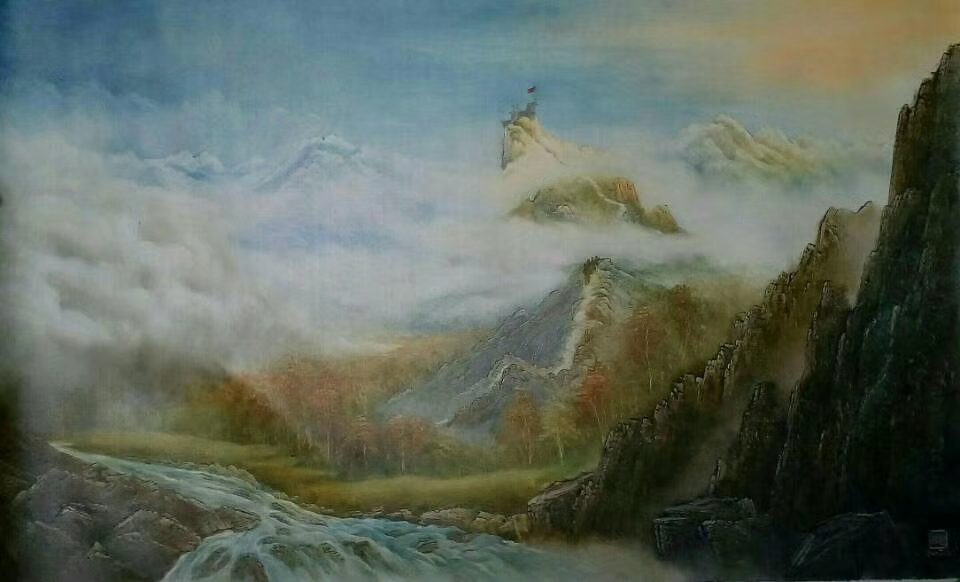
What Is Knife Painting
Knife painting is a textured oil painting technique in which the artist uses steel palette knives and blades instead of traditional brushes to apply and shape pigment on canvas. The blade can spread thick layers of color, carve sharp edges, lift pigment to create light, and build the raised surface that defines the medium.
In Chinese landscape knife painting, this technical approach is paired with the compositional philosophy of classical shan shui — layered depth, mountain rhythm, water movement, and the quiet atmosphere of mist and distance. The result is work that feels both materially present and spiritually restrained.
A sculptural surface. Unlike brushed oil painting, knife work builds a raised, tactile topography on the canvas. Light catches the ridges and valleys of the pigment, giving the landscape a living quality that shifts as you move past it.
Structure before detail. The blade forces the artist to build form through mass and edge rather than line and rendering. This is why knife painted mountains feel weighty, architectural, and rooted in geological reality.
Handmade evidence. Every stroke, scrape, and lift carries the pressure and movement of the hand. No two works can be identical — each piece carries the direct physical record of its creation.
Tools and Materials
Knife painting relies on a small set of precise tools and high-quality oil pigments. The blade is not a single instrument — different shapes and flexes create different landscape effects.
Steel Palette Knives
Flexible and rigid blades in various shapes — straight, curved, and pointed — used for spreading pigment, carving edges, and lifting color.
Oil Pigment
High-density oil paint in earthy mineral tones — ochre, umber, cadmium, cobalt, and iron oxide — chosen for opacity and structural body.
Linen Canvas
Heavy-weight linen stretched over hardwood frames, sized to hold thick pigment layers without warping under the pressure of the blade.
Four-Step Creation Process
Each knife painting is built in distinct stages, from the initial ground layer to the final atmospheric details. The blade works differently at each step — first building mass, then refining form, then building texture, and finally breathing life into the mist and distance.
Composition and Ground
The canvas is toned with a warm ground layer. The artist sketches the mountain structure, river path, and mist zones — establishing the rhythm and depth architecture before any pigment is raised.
Building the Main Forms
Thick pigment is applied in broad masses to build the primary mountain ranges, cliff faces, and water bodies. The blade presses and scrapes to establish the large-scale structure and weight of the landscape.
Layering Pigment and Texture
Successive thin layers build color depth and surface texture. The knife drags, lifts, and carves to create rock faces, forest texture, water movement, and the tactile topography that defines the medium.
Atmosphere and Final Detail
Glazes and carefully lifted edges create mist, distant mountains, and soft light. Final details — a path, a roof, a bird — ground the monumental landscape in human scale and quiet narrative.
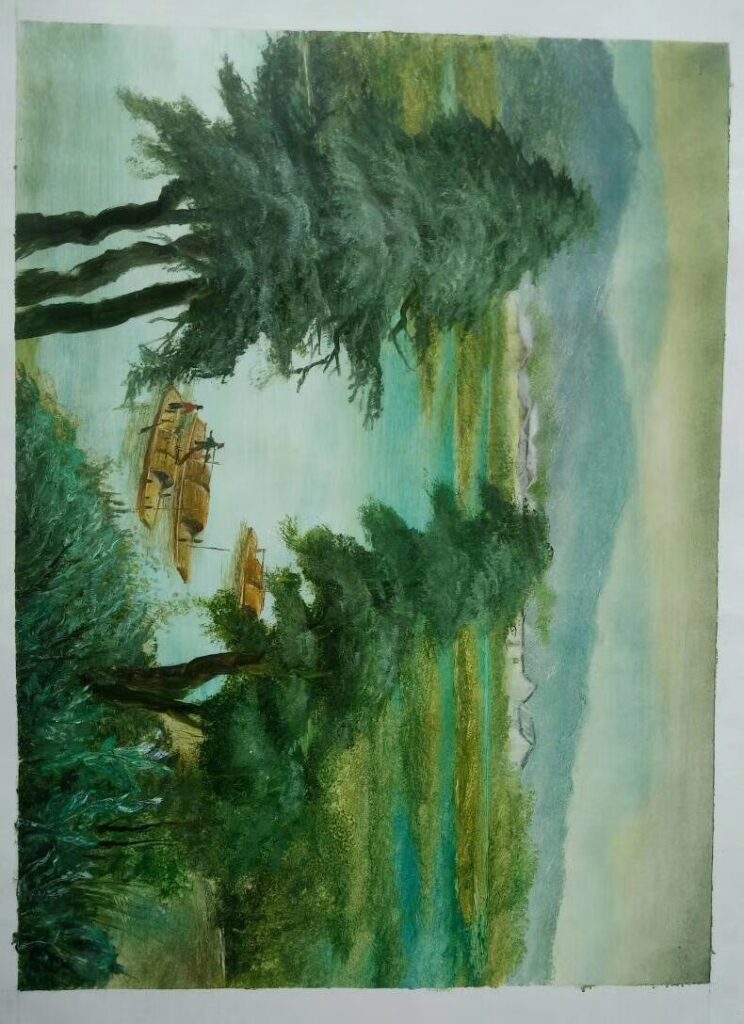
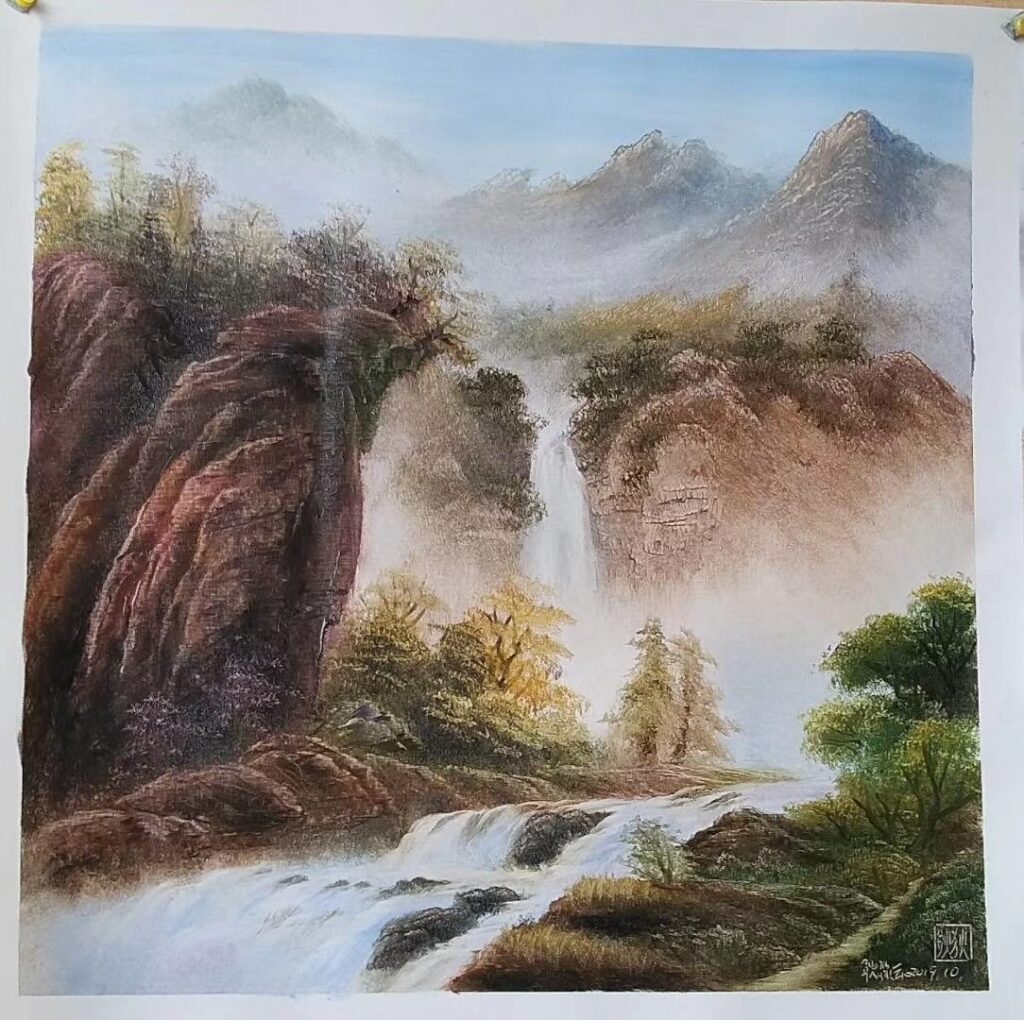
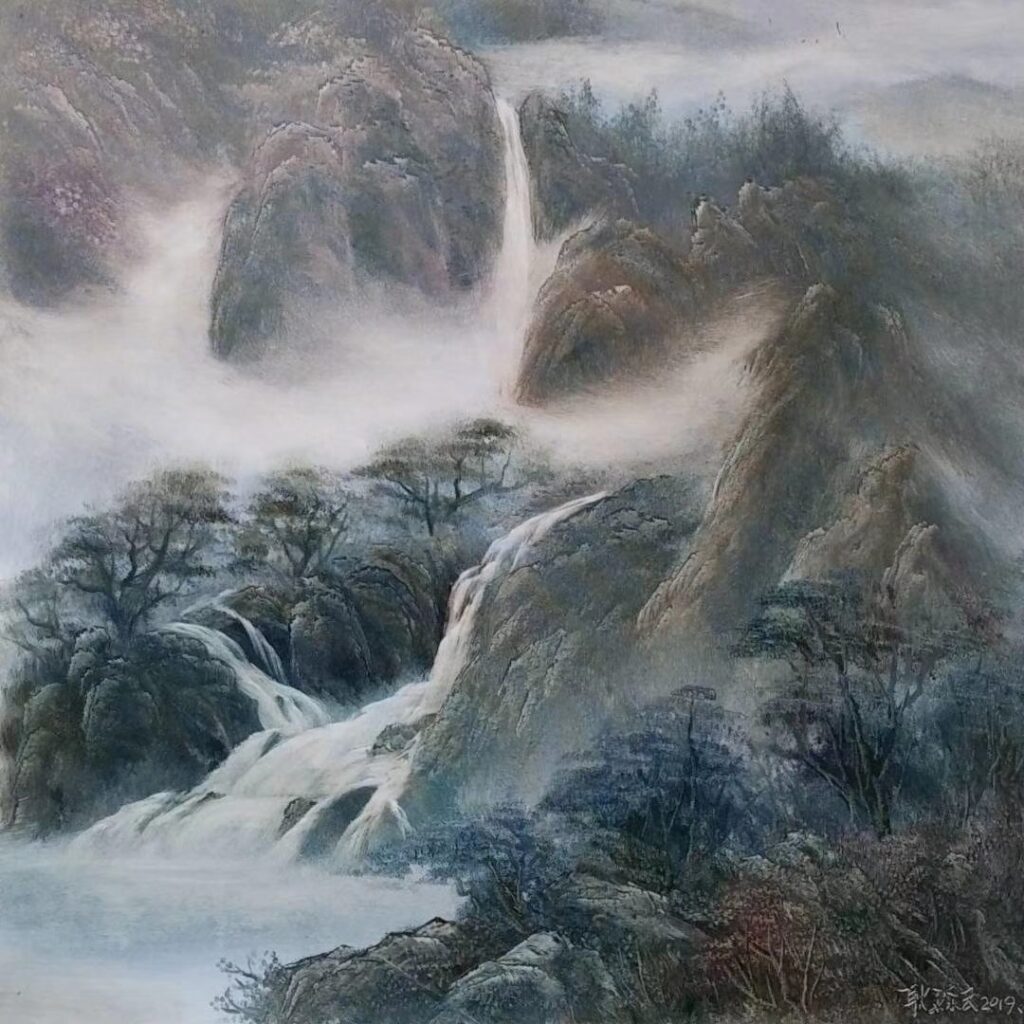
Texture Detail Gallery
Three categories of surface detail define the knife painting experience — the structural weight of rock, the fluid movement of water, and the soft dissolve of mist and distance.
Knife Painting vs Traditional Brush Painting
Both approaches create beautiful oil painting. They simply speak different languages — one through the softness of the brush, the other through the structure of the blade. Neither is superior; each has its own character and purpose.
Traditional Brush Painting
- Soft, blended transitions and atmospheric edges
- Fine detail possible through brush point and bristle control
- Smooth, even surface with subtle sheen
- Glazing techniques build luminous color depth
- Ideal for portraiture, botanical work, and soft light
- Long tradition in both Eastern and Western painting
Knife Painting
- Sharp edges, structured forms, and sculptural surface
- Texture created through pigment thickness and blade pressure
- Raised, tactile surface that catches ambient light
- Layered pigment builds both color and physical depth
- Ideal for mountains, rock faces, water movement, and atmosphere
- Contemporary technique rooted in classical landscape philosophy
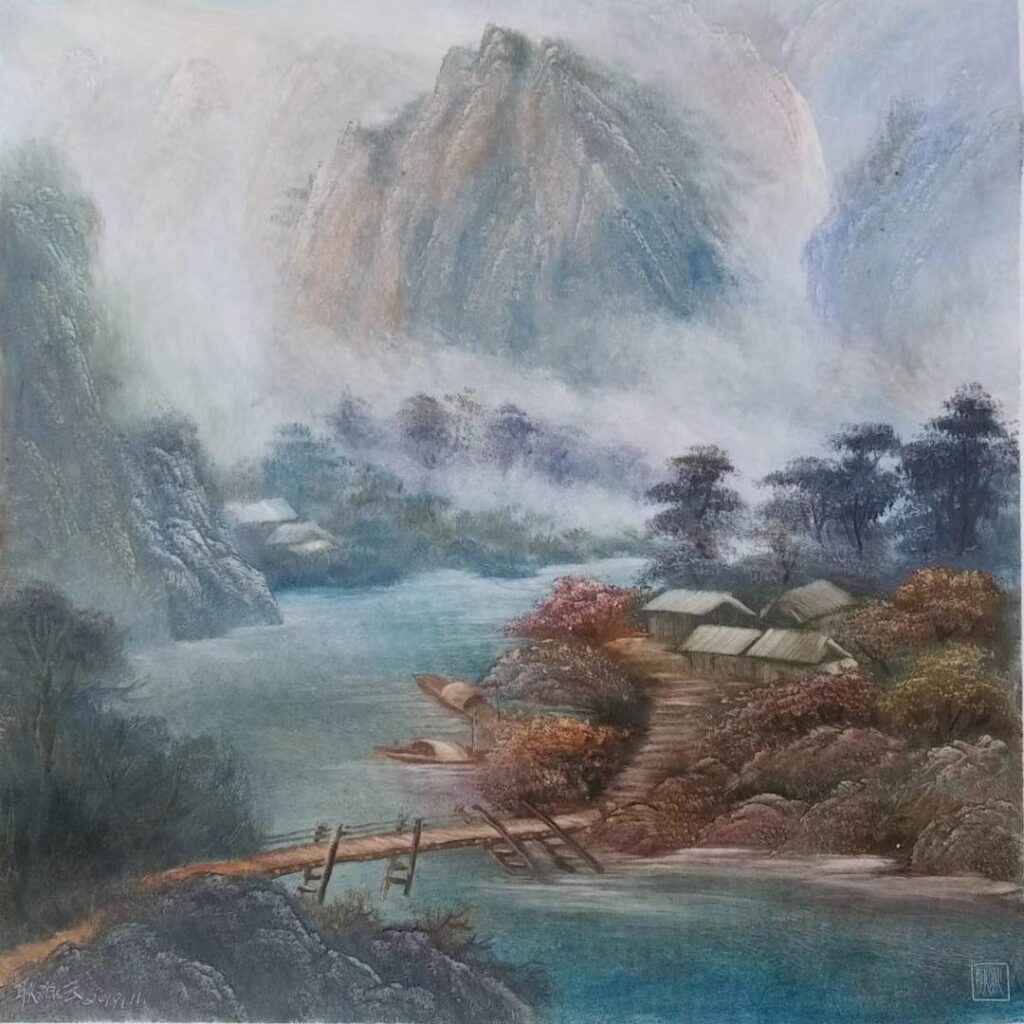
Shufeng Sichuan Landscape Style
Shufeng Studio’s knife painting practice draws directly from the landscape of Sichuan — the steep gorges of the Min River, the mist-shrouded peaks of Emei, the terraced villages of the basin edge, and the dense forests that climb the mountain slopes.
Rather than copying classical compositions, the studio paints from direct observation of Sichuan’s geography, translating real mountain structure, real river light, and real atmospheric conditions into the language of the blade.
The result is work that feels authentically Chinese without being nostalgic — contemporary landscape painting with the weight of place behind it.
- Deep valley perspective
- Layered mist zones
- Waterfall movement
- Village and path detail
- Autumn mineral tones
- Quiet human presence
Three Selected Knife Paintings
Three representative works from the Shufeng collection that demonstrate the range of the knife painting technique — from vertical gorge compositions to broad panoramic mountain views.
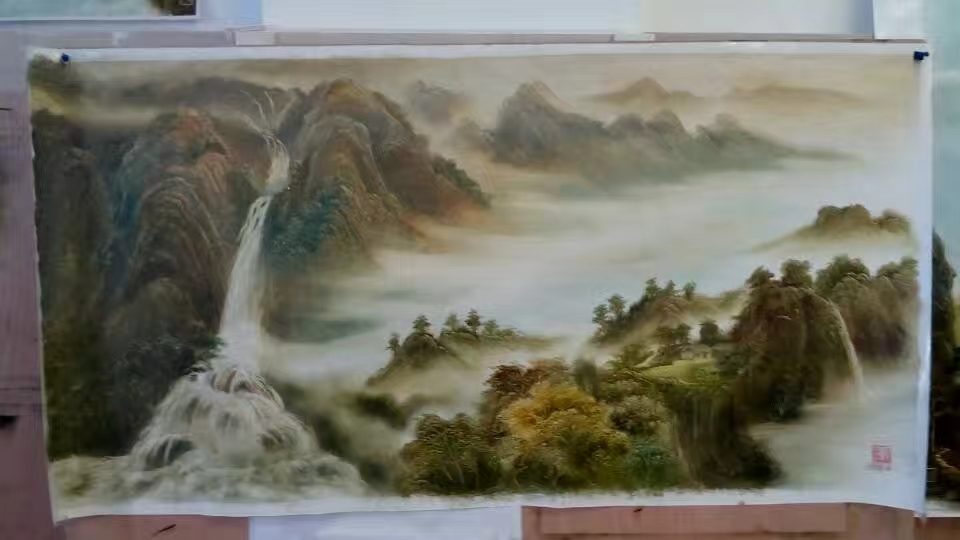
Cloud Valley Waterfall
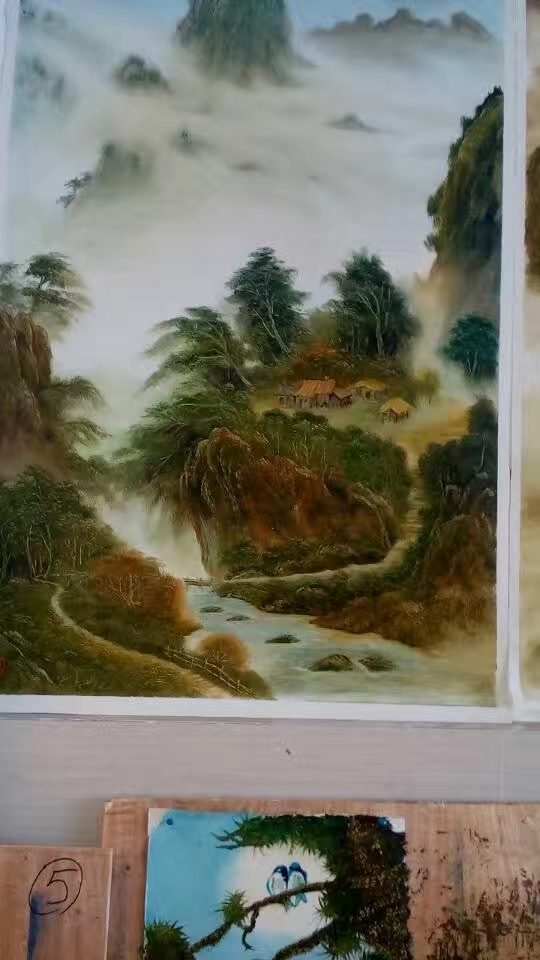
Long Waterfall Landscape
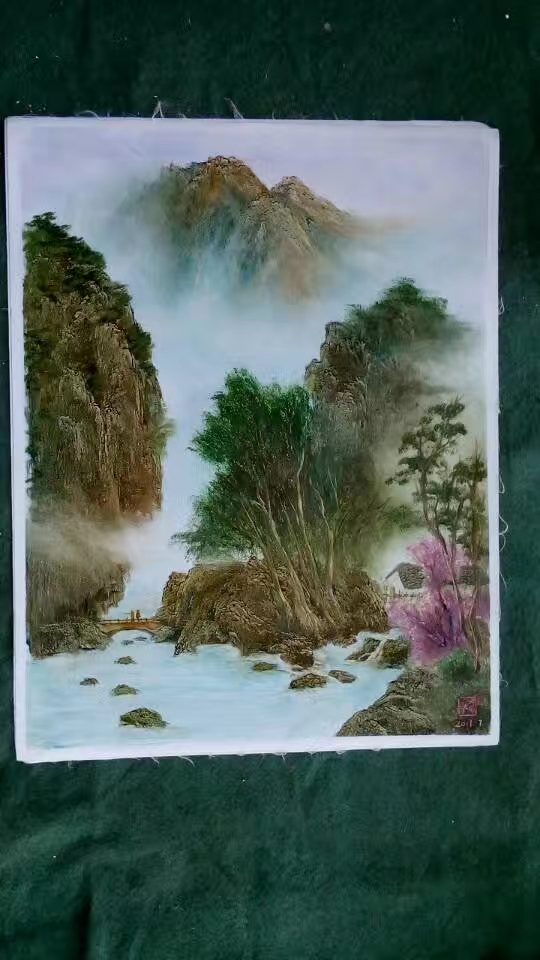
High Waterfall Gorge
Commission a Knife Painting for Your Space
Every Shufeng knife painting is handmade to order. Share your wall dimensions, preferred subject, and desired atmosphere, and the studio will create a custom artwork tailored to your space — whether for a private residence, hotel lobby, villa, or cultural interior.